Searching Clay County Civil Dockets
A Clay County civil docket search starts at Minnesota Court Records Online, known as MCRO. Open Case Search and accept the portal terms. Pick the Name, Case Number, or Attorney path. Choose Civil under Case Category, then select Clay under Court Locations with the Select Specific County option. A person or business name works when the number is unknown. A full case number is far more exact. It also spares you pages of similar-name results.
Name matching is exact by default. Enter the spelling you know first. If nothing turns up, try a middle initial or drop the middle name entirely. A wildcard can follow at least two characters. Sounds Like catches phonetic spellings. But it cannot pair with a wildcard, and its first letter must match. Date Filed, case status, and the Clay selector trim a long Clay County result list. They do not change what the case itself means.
- Open MCRO Case Search and accept its terms of use.
- Select Civil and limit Court Locations to Clay County.
- Search by a full case number, name, business, or attorney.
- Open View Case Details on the matching result.
- Use Court Administration for certification or an unavailable record.
Clay Civil Docket Filters
MCRO gathers civil, criminal, family, and probate or mental-health categories into one search form. Choosing Clay is what steers a statewide search. It points to Clay County District Court in Minnesota's Seventh Judicial District. That structure matters. Clay County conciliation, eviction, and other civil processes can share the same access layer. But they follow different record rules. So treat the Civil box as a first filter. It is not a promise that every related document is available online.
| MCRO control | Use for a Clay civil search |
|---|---|
| Name type | Choose Person or Business before entering known name parts. |
| Date Filed | Use an exact date or range only when it is known. |
| Case Status | All, Active, or Inactive narrows results; it is not an outcome label. |
| County location | Select Specific County and choose Clay under C. |
Click Find to search and Clear to reset. The official instructions favor the page breadcrumb over the browser Back button. MCRO is free and requires no registration. Even so, Clay County civil results there are unofficial. The portal cannot file a civil paper, set a hearing, take payment, or issue a certified copy for Clay County.
Inside a Clay County Civil Docket
Case Details turns a search result into a true court record summary. Minnesota names the chronological activity list the Register of Actions, or ROA. The case-information area can show the case number, title, type, filing date, court location, judicial officer, status, flags, and related cases. From there, the ROA lays out dated events and hearings. A hearing calendar row is only one setting, though. It never replaces the full Clay County case history.
| Case Information | Case number, title, type, date filed, venue, officer, status, flags, and related cases. |
|---|---|
| Case Events | Dated procedural entries, filings, orders, or other recorded activity. |
| Hearings | Settings with date, time, location, officer, and hearing type where populated. |
| Dispositions | Court-labeled outcomes that should be read with their date and exact wording. |
| Financial Information | Amounts recorded in the case; MCRO does not accept payments. |
Judgment Details may show a Clay County docketed money judgment, plus a satisfaction when one has been recorded. Read the screen carefully. A blank field is not proof the item never existed. Older, restricted, destroyed, or non-electronic Clay County records simply return fewer results.
Clay Civil Docket Records
The ROA, a public document, and a certified copy are three different tools in Clay County. Case Search opens the case shell and its activity record. MCRO Document Search takes a complete case number and locates public documents within remote-access rules. Anything you download stays unofficial, watermark or not. Clay County Court Administration issues certified or exemplified copies when the request is allowed.
When a Clay County record is not online, that same office is the local access point. You will find it at the Clay County Courthouse. Staff there can explain courthouse inspection, an off-site file, or a copy request. They can also explain why a document has narrower access. The statewide copy-request form or a plain letter works for Clay. The official list names no separate Clay form. Ask for the precise document and copy type. A vague request for the whole file slows things down.
Note: The separate MCRO Document Search requires a complete court file number. Even a party name that already produced a Case Search result is not enough.
Civil Case Types on the Docket
Clay County District Court holds trial-level jurisdiction over civil, family, probate, juvenile, criminal, traffic, and conciliation matters. Civil results can therefore sit beside divisions that are legally distinct. Some are governed by different remote-document rules. The labels below describe common Clay County court paths. They are not a guarantee that every matter is viewable through the same MCRO screen.
- General civil lawsuits, including contract, property, or injury disputes.
- Conciliation Court claims handled as a District Court process.
- Eviction cases that can also appear on a daily court calendar.
- Family and post-adjudication paternity matters with narrower remote documents.
- Probate, guardianship, conservatorship, and trust records, subject to protected information.
A city administrative fine or ordinance hearing in Clay County is not automatically a civil court case. The city keeps its own administrative record. That changes only if the matter was filed in Clay County District Court. Keep that line clear. It prevents mistaking a city payment channel for a state court docket.
Clay Conciliation Docket Fees
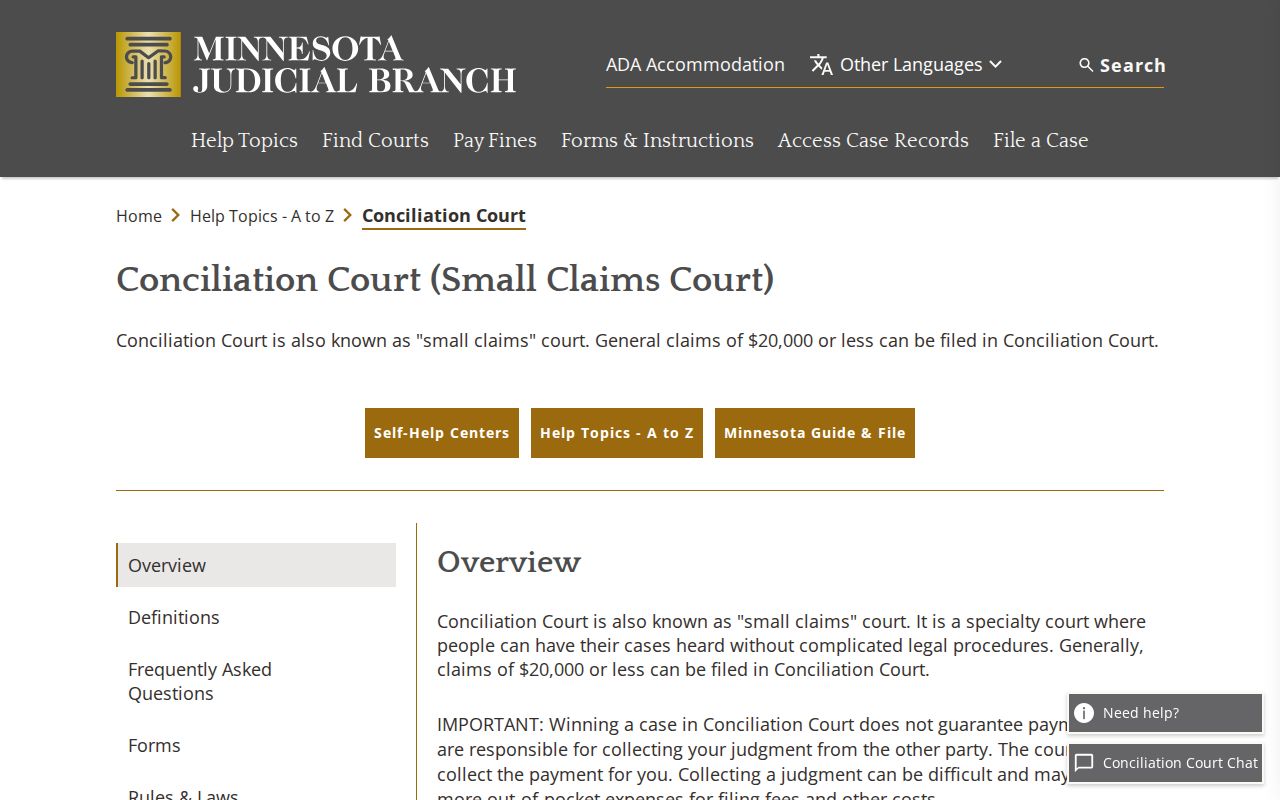
Conciliation Court handles small claims in Clay County District Court. A claim there is generally $20,000 or less. Move the same dispute into the regular District Court track and no monetary limit applies, subject to Minnesota law and procedure. The usual path runs from claim and service to hearing and judgment. Removal or appeal can open a different filing route in Clay County District Court.
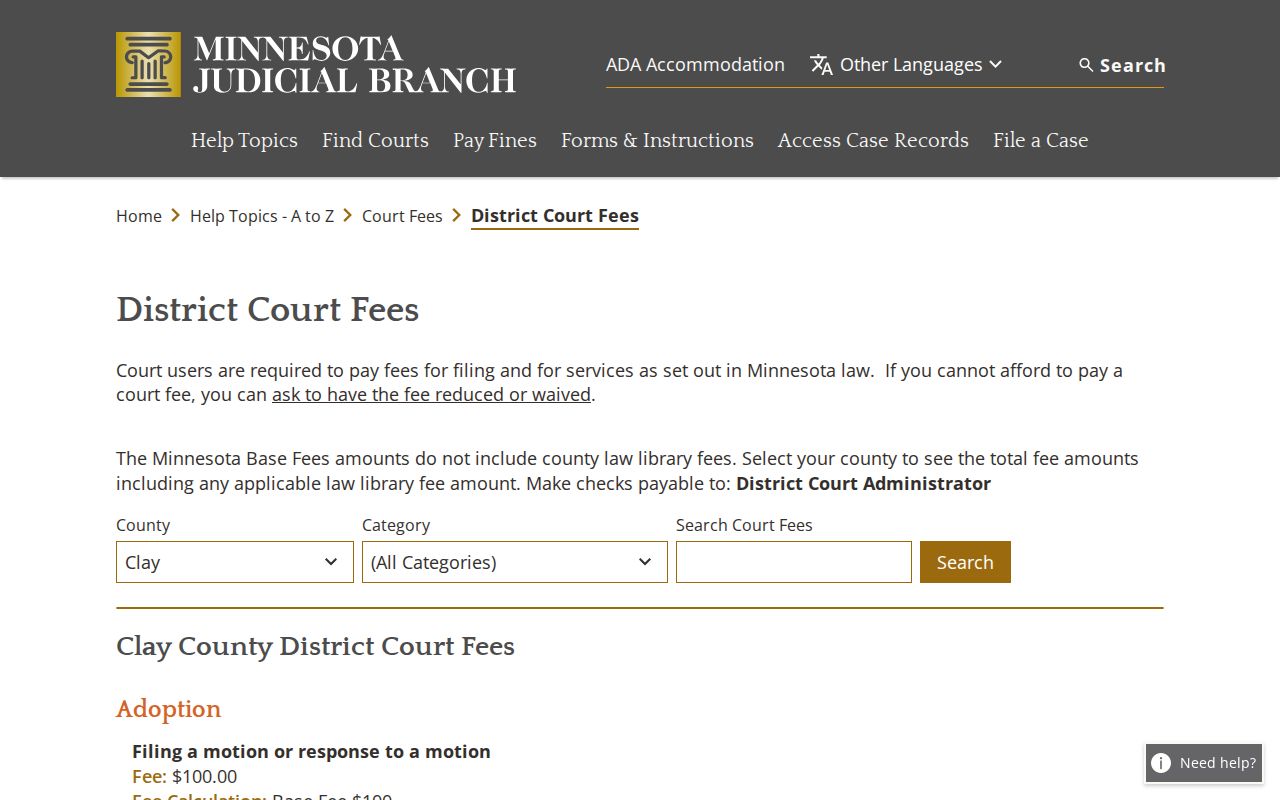
Fees tell part of the story. The Clay County fee table shows a $75 conciliation first-paper fee, a $320 removal appeal fee, and a $420 jury removal or appeal fee. Those are filing fees only. Viewing or copying a Clay County court docket costs something separate, and the fee schedule splits certified copies from plain copies, so know which document type you need before you request one.
Check two official sources before filing. The Minnesota Judicial Branch Conciliation Court page explains the small-claims process Clay County uses, while the Clay County District Court fee page lists current charges and waiver options administered by the court.
Civil Docket Settings and Hearings
No two Clay County civil cases run the same course. A typical track may include a complaint or petition, service, an answer, a scheduling conference, motions, a settlement conference, trial, judgment, and satisfaction. Plenty of cases end early. Some steps simply never happen. The Register of Actions shows the path a particular Clay County case actually took, while the court calendar lists only what is scheduled at a given moment.
Labels on the daily calendar include Scheduling Conference, Settlement Conference, Conciliation Hearing, Motion Hearing, Eviction Hearing, and Court Trial. Each label tells you why a hearing exists. It tells you nothing about the outcome. Find a setting through the MCRO Hearing Search or the Clay County calendar, then trust the hearing notice and Court Administration for word of any change.
Clay Civil Docket Continuances
Want a conciliation hearing moved in Clay County? Put the request in writing at least five days before the hearing date. The Minnesota Judicial Branch caps a continuance at $50 and generally allows each Clay County party only one. Remember the limit applies to small claims. It does not govern every civil case. A request alone never means a new date exists until the court acts on it.
Missing a conciliation hearing creates its own problem. The absent party can ask the court to vacate the result and set a new hearing following the court's instructions. A regular removal or appeal works differently. It runs through a Demand for Removal or Appeal. A business pursuing that appeal generally needs a lawyer. Whatever the case type, look for a fresh ROA entry or confirmation from Clay County Court Administration before assuming any court date changed.
Setting reminder: A scheduling or settlement conference can move a civil case forward, but it is not itself a judgment or a final disposition.
Civil Docket Access Rules
Minnesota Rules of Public Access Rule 2 creates a general presumption. Under it, Clay County court records are open. Exceptions exist only where a rule, statute, or court order makes a record nonpublic. Rule 4 governs how accessibility of a Clay County case record gets decided. Rule 8, subdivision 2, restricts remote inspection and copying. Courthouse access can actually be broader than what an online docket search returns. Open access, in short, does not mean every filing or personal field appears remotely.
Access rules: Minnesota Rules of Public Access Rules 2, 4, and 8 subd. 2 govern the general presumption, accessibility review, and remote-access limits. Minn. Stat. § 13.84 protects specified court-services data without making all court records private.
Family and post-adjudication paternity cases in Clay County carry especially narrow remote access. For covered family matters, the principal documents available remotely are court-prepared orders, appellate opinions, and court-generated notices. If a Clay County record seems missing, confirm with Court Administration rather than calling it sealed just because MCRO does not show it.
Clay Civil Docket Boundaries
MCRO is the state-district access layer for Clay County court records. It is not the home of every local dispute record. City offices keep administrative fines on their own. So do parking matters, ordinance cases, and police or council records. A city issue can become a filed state case. Then the court record sits with Clay County District Court. Select the county court in MCRO. It helps separate a filed case from an administrative matter that never reached District Court.
Fees and access questions have distinct answers. The Clay County District Court fee source separates filing costs from copy and certification charges. The Clay County District Court official page points the public toward court and calendar resources. For a certified copy, a record missing remotely, or any public-access question, contact Clay County Court Administration. Its courthouse counter has one more role. Rule 8 allows inspection there of records the portal will not display.