
Searching the Clay County Court Docket
Start a Clay County court docket search with Minnesota Court Records Online, known as MCRO. It is the public entry point for state District Court cases. There is no separate county-owned search system behind it. To keep results local, pick Clay in the county control. A full court file number works best. Name, citation, and attorney searches also work. Spelling, date ranges, and the chosen case category all shape what comes back.
Clay County District Court handles the county's full caseload. That covers civil, criminal, family, probate, juvenile, traffic, and conciliation matters. Treat any MCRO result as a reference entry, not an official copy. The actual court record can hold more than a remote result shows. A missing result can stem from several causes. An access limit, an older paper file, a name mismatch, or a bad filter can all be behind it. Before calling Clay County Court Administration, gather a few things. Have the case number, case type, and filing county in hand.
- Open MCRO Case Search and choose Clay County if the case is believed to have been filed locally.
- Enter the complete case number, citation number, party name, or attorney information that is actually known.
- Use category and date filters only when they help narrow a broad Clay County result list.
- Open Case Details to read the Register of Actions, hearings, and other available public fields.
- Confirm a current setting or request a certified copy from Clay County Court Administration when the record will be relied upon.
Clay County MCRO Search Lanes
One docket search actually splits into four MCRO tools. Case Search returns the case shell plus its available Case Details. Document Search needs a complete case number. It then locates public documents. Hearing Search covers settings by date, case, person, attorney, or judicial officer. Judgment Search stands apart. It searches docketed money judgments by debtor, docketed date, and status. Each lane can be narrowed to Clay County. Each answers a different question.
| MCRO tool | Best use in Clay County | Important limit |
|---|---|---|
| Case Search | Find the case record and Register of Actions. | A pending criminal case without a conviction may not be found by defendant name. |
| Document Search | Locate a public document after finding the complete court file number. | It is not a name-based document search. |
| Hearing Search | Find a Clay County hearing setting by date or case information. | It does not replace the most current courthouse calendar. |
| Judgment Search | Check docketed money-judgment information. | It is not a full case-history search. |
MCRO is free and needs no registration for Clay County work. It cannot certify a record, take a payment, file a document, or schedule a hearing. When restarting a search, use the tool's own breadcrumb and Clear controls rather than the browser Back button.
Inside a Clay County Court Docket
A Clay County court docket is the public view of the case record. Minnesota often calls the running history the Register of Actions. It can show a case was filed. It can also show assignment, a hearing setting, an action taken, or closure. None of that makes an entry a conclusion about the people named. A charge is an accusation, for instance. Read any listed disposition by its exact court label.
| Case number | The court's identifier, used for exact Case Search and Document Search. |
|---|---|
| Case information | Case type, filing date, Clay County venue, judicial officer, status, flags, and related-case references where available. |
| Register of Actions | A dated sequence of case events, filings, orders, and procedural entries. |
| Hearings | Setting date, time, location, judicial officer, hearing type, and connection information where public. |
| Disposition | The court-labeled outcome or status entry, which must not be reduced to a guess. |
| Financial information | Amounts or events shown in the record; MCRO does not take payment. |
Fields in a Clay County court docket can be incomplete. Some items are not public. Others are not available remotely. A calendar listing is not the full Register of Actions either. Need the exact document rather than a docket view? Note the case number. Then ask the local court office for a plain, certified, or exemplified copy.
Clay County Case and Citation Numbers
A case number and a citation number are different things. That matters in a Clay County court docket search. The Minnesota court file number identifies the filed court matter. Clay examples carry the county prefix 14, such as 14-CR-26-2384 and 14-VB-26-1862. Treat those as format examples only, not live records. The full court file number matters most for document requests. It also confirms a name result belongs to the right case.
A traffic citation number is usually a 12-digit statewide identifier. It is printed near the top of the citation or barcode. It may lead to a later case record. It and the resulting court file number play different roles. A plate number will not work in the online or automated phone payment system. Has a citation not posted yet? Minnesota says processing can take up to seven business days or longer.
Search carefully. Clay County name searches begin with exact matching. Try a middle initial variation only when appropriate; MCRO permits a wildcard after two characters, while Sounds Like cannot be used with a wildcard.
Courts That Keep Dockets in Clay County
Clay County runs on one unified state trial-court layer. Clay County District Court sits in the Minnesota Seventh Judicial District. It handles the full range of local state cases. Conciliation Court is a District Court process, not a separate city court. City records still matter. But a city prosecutor, police department, parking office, ordinance file, or City Council record is not automatically a court docket. Where the case was filed controls which record system applies.
| Court or record layer | What it covers | Where to search or ask |
|---|---|---|
| Clay County District Court | Local civil, criminal, traffic, family, probate, juvenile, and conciliation cases. | MCRO, the Clay daily calendar, and Clay County Court Administration. |
| Minnesota appellate courts | State appeals from trial-court judgments. | Minnesota appellate resources, not the Clay County trial calendar. |
| City offices | Police, parking, ordinance, prosecutor, or administrative materials held by a city. | The applicable city office; use MCRO only if a state court case was filed. |
| Federal courts | Federal civil, criminal, bankruptcy, and appellate matters. | PACER or the appropriate federal court, not MCRO. |
Clay County is one of ten counties in the Seventh Judicial District. District administration coordinates the whole district. A case-specific calendar or records question belongs with Clay County Court Administration instead. Keep that distinction in mind. A judicial district description is not a local docket office.
Clay County Court Docket Calendar Layer
Clay County posts a daily court calendar at 7 a.m. on business days. Updates come hourly. Its fields include hearing location, date, time, judicial officer, and hearing type. Connection type and case number round out the entries. The calendar is not a complete docket, though. The local court warns that not all matters are posted. Confidential matters plus records with remote-access restrictions do not appear.
Per the court, the printed calendars are the most current version. You will find them outside courtrooms and in public lobbies. So the calendar is a strong first stop for a hearing check. A missing event is not proof of a cancellation. Your hearing notice and direct confirmation with court staff control your appearance. For a tighter workflow, pair Clay County court dates with hearing search. Add the local calendar too.
Minnesota's hearing guidance also makes the notice the controlling source for remote or in-person instructions. A connection-type field describes a calendar entry. It is not permission to skip an appearance.
How to Find Court Dates and Settings
Looking for a Clay County court date? A few tools cover different slices of the calendar. With a full case number in hand, MCRO Hearing Search is the fastest route. The county also posts a daily PDF of local settings. When the two disagree, call Court Administration. Staff there can sort out the conflict. They can tell you what the counter holds. They can confirm which courtroom calendar is current. Still, the hearing notice beats them all for exact appearance instructions. A docket search can lag behind a last-minute calendar change.
Reading a Clay County docket means knowing the hearing labels. You will see arraignment, first appearance, initial appearance under Rule 8, omnibus hearing, pre-trial, motion hearing, court trial, scheduling conference, settlement conference, conciliation hearing, review hearing, eviction hearing, and probation violation hearing. Each label states the purpose of a setting. None of them is a result. A docket entry listing one of these hearings is not proof that the case was resolved. Treat labels as schedule facts only.
- Setting
- A scheduled court event with a date, time, location, and purpose.
- Continuance
- A court-approved move of a scheduled event to another time.
- Register of Actions
- The chronological case-event record that functions as the Minnesota docket history.
- Connection Type
- A calendar field describing the listed appearance arrangement; follow the hearing notice for instructions.
Public Access to Court Dockets
Minnesota presumes openness. The Rules of Public Access treat court records as accessible. A rule, statute, or court order must say otherwise. For anything that needs inspection, a copy, or a current explanation of access, Clay County Court Administration is the local office to contact. One caution: remote access through MCRO can be narrower than walking into the courthouse. Before concluding a record does not exist, double-check the spelling, the county, the date range, the case type, the public-access status, the age of the file, and whether it exists electronically. A missing online result often has a simple fix.
Key access rules:
Minnesota Rules of Public Access, Rule 2 presumes court-record access unless another authority restricts it.
Rule 4 governs how case-record accessibility is determined.
Rule 8, subdivision 2 sets important remote-access and inspection-copying limits.
Minn. Stat. § 13.84 protects certain court-services data, including specified treatment, counseling, psychological-evaluation, and probation information.
Clay County Court Docket Access Limits
Access to a Clay County court docket has limits you should expect. Juvenile, family, mental-health, domestic-abuse, harassment, CHIPS, civil-commitment, sealed, expunged, and other restricted matters may show fewer fields or documents online. Dates matter too. Public civil and criminal documents filed on or after July 1, 2015 have broad MCRO availability. The stated exceptions still apply. Older files get narrower online coverage. So do certain case types.
Going to the courthouse may be the next route. Inspection in person does not override a confidentiality rule or a seal order, though. A confidential or sealed record follows its own process. The state CON101 access form asks why access is sought and which records are requested. Even if access is granted, you still need a separate copy request. Expungement under Minnesota Chapter 609A raises one more wrinkle. A clean remote search does not prove the complete record history.
Note: A no-result Clay County docket search can stem from several sources. Access, coverage, retention, and spelling issues all count. Court Administration is the proper place to verify.
Clay County Docket Filing and Viewing
Minnesota eFile & eServe, called eFS, is the lane for filing and serving court papers. It is not the public view of a Clay County court docket. Attorneys, government filers, and guardians ad litem generally must file and serve electronically. Self-represented users may use eFS too. Criminal and juvenile charging documents are a big exception to the usual path. And an eFS account never equals MCRO access for public case information.
For copies, a party can file into an existing case through eFS. A non-party should first ask Clay County Court Administration for an administrative court-file number. Do that before trying this route. January 2024 brought another change. A valid email became necessary to access documents through eFS or email. That is one more reason. Filing access and public MCRO availability are different things. Documents accepted through e-filing stay in the court file. The access rules that apply still govern.
The state tracks district-court volume in an official District Court filings dashboard. It reports the filing activity behind the courts.
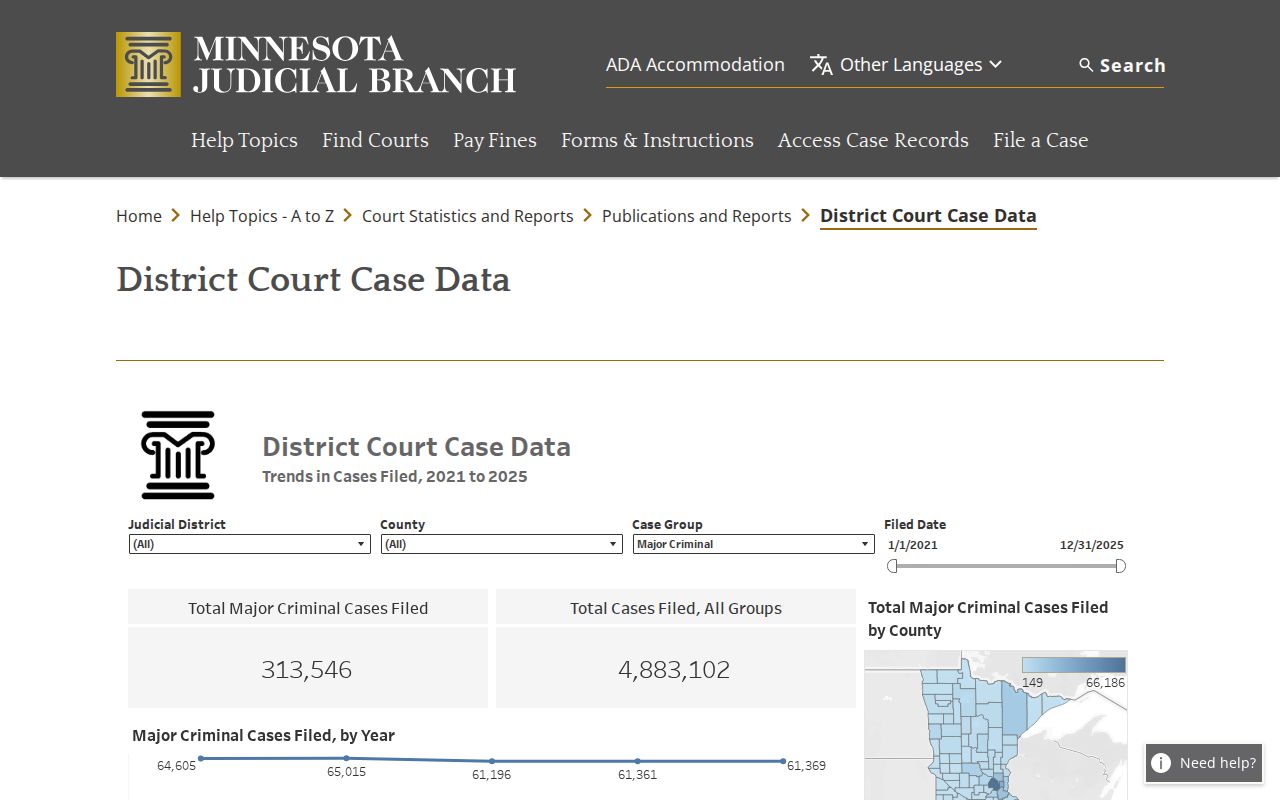
That filing dashboard shows the separate reporting layer behind a Clay County court docket. Its figures measure filings, not results, so do not treat search hits as a count of local cases.
Docket Records at the Clerk's Office
Where do Clay County court records actually live? At the Court Administration office. That office serves as the public counter and records-access point for Clay County District Court. Minnesota does not use a separately identified elected county clerk of court here. The public directory lists Renelle Fenno as Court Administrator. Her office handles public inspection, case-record copies, and certified and exemplified copies. It also takes current calendar questions and holds records that never show up remotely. Ask there about an older file that sits off-site. Ask, too, whether a non-party needs an administrative number for an electronic request.
Clay County Court Administration
Clay County Courthouse, second floor
807 North 11th Street, Moorhead, MN 56560
218-227-7040
When is the courthouse the better choice? A certified document, an older paper file, a restricted-record access answer, or the freshest calendar all point there rather than to an online search. Payments are a different matter. The Court Payment Center handles eligible fine-payment channels, but it is not where Clay County's records are kept.
Clay County Specialty Court Docket Context
Specialty programs in Clay County sit on top of regular cases. The Minnesota Judicial Branch directory names Clay-Becker Treatment Court and Clay County DWI Court. Clay County materials also describe Drug Court, Domestic Violence Court, and Veterans Court. None of these programs runs its own public docket. The case itself stays in District Court. So a referral, review, compliance event, disposition, or sentencing entry appears in the Register of Actions when public. Treatment and juvenile details can be restricted.
The Clay-Becker Treatment Court contact sits at the Clay courthouse. Even so, the program serves more than one county. Program boundaries and case-filing boundaries do not always match. A tally of past participants is not a case count. A specialty-calendar label proves neither eligibility nor completion. Take program questions to the official program contact. Use the Clay County court docket for the public case record.
The official incorporated-place population source ranks every Clay County city by population.
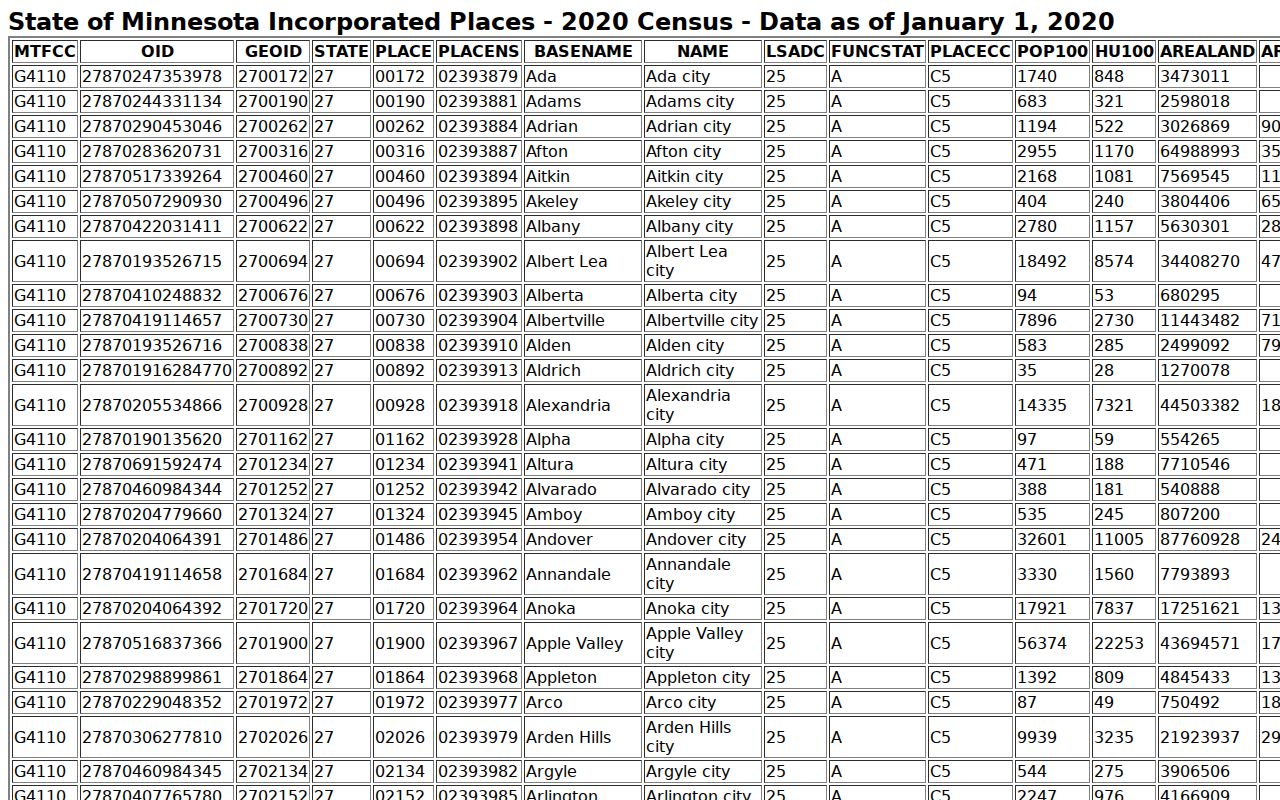
The official incorporated-place source backs the city ranking. A population rank alone never tells you which record office holds a given Clay County case.
Clay County Docket or Federal Docket
Some Clay County cases are federal. Federal matters show up in neither MCRO nor the Clay County daily calendar. The closest listed federal location is the Fergus Falls division. It belongs to the U.S. District Court for the District of Minnesota. Federal case searches and documents run through PACER and CM/ECF instead. State appeals leave the trial-court docket layer too. Those cases belong to the Minnesota Court of Appeals or Supreme Court resources. Check the right system before you search.
The Fergus Falls federal courthouse page lists the division's address and contact details.
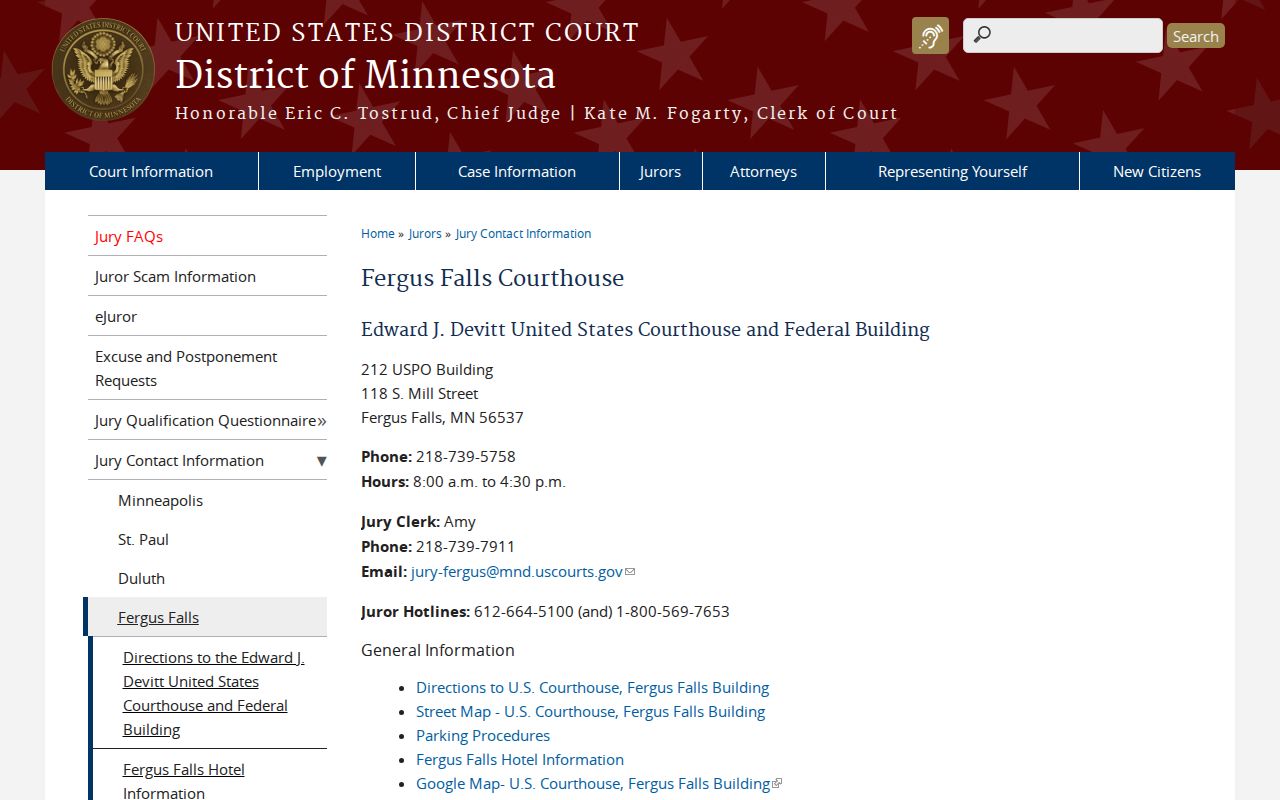
Jurisdiction matters before any Clay County court docket search. A federal filing will not appear in state tools. The District of Minnesota CM/ECF information page explains how federal electronic filing works.
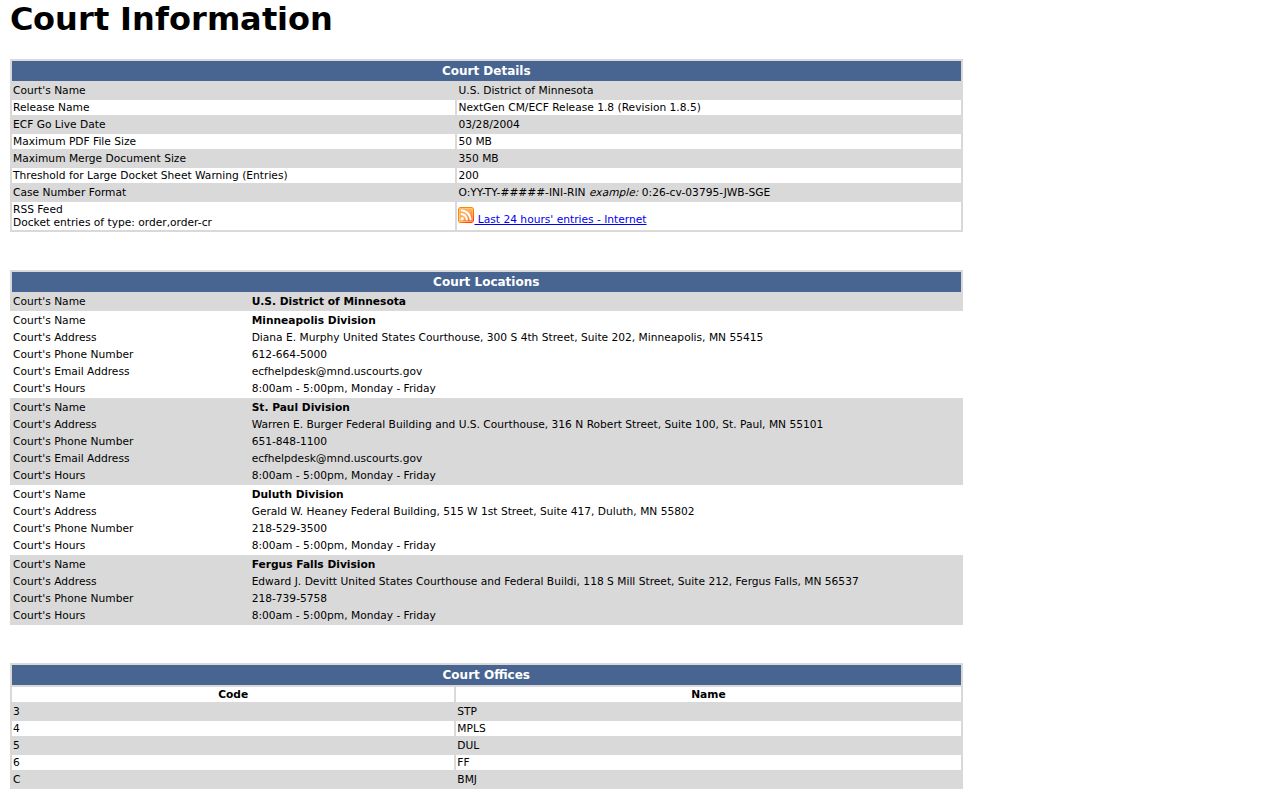
CM/ECF belongs to the federal courts, not to Minnesota's state system. The official PACER entry page opens federal case searches.
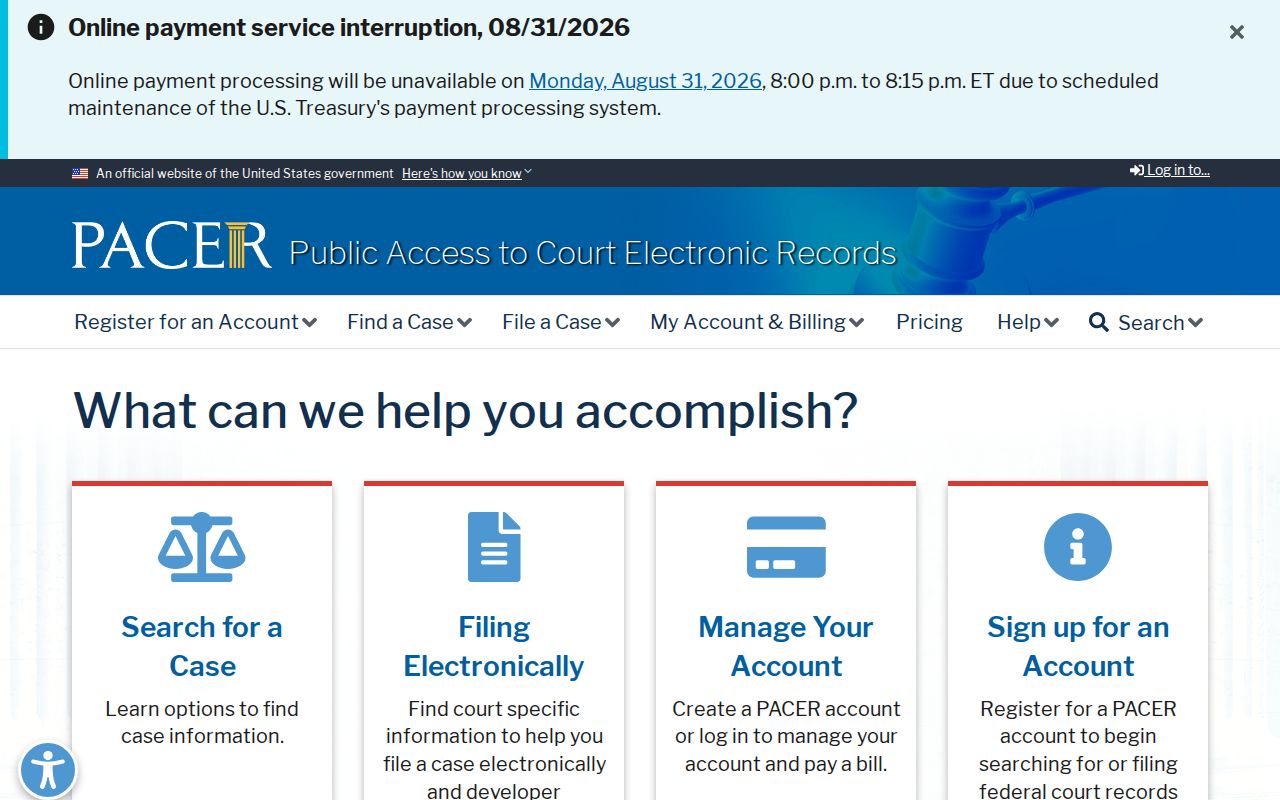
PACER is the official entry point for federal filings. When a case sits in the federal system rather than Clay County court, search there.
Clay County Court Dockets by City
Moorhead leads the list of Clay County cities worth checking. Dilworth, Barnesville, Hawley, and Glyndon round out the five largest incorporated places from the official 2020 population ranking. None of them runs its own municipal court docket. No city offers a separate court search portal either. Local paperwork may still sit with the city office that handled it. Think of a parking ticket, a police report, or an ordinance case. The moment a case is filed in state court, that changes. Clay County District Court and MCRO become the right routes for the court docket. So start with the city record channel first. Then move to the county docket if a state case turns up.
Moorhead Docket Search
County seat. City prosecutor matters can appear in Clay County District Court; city parking and police records use separate city channels.
Dilworth Docket Search
City ordinance and City Hall materials are distinct from a filed Clay County state-court case.
Barnesville Docket Search
City governance records are not court events; a filed state case is searched through Clay County.
Hawley Docket Search
Police and city-code materials are local records, while filed state cases use the Clay County docket.
Glyndon Docket Search
Administrative penalties and a filed state case follow different records paths.
Map and Directions to the Clay County Courthouse
Clay County District Court files are kept at the Clay County Courthouse in Moorhead, on the Minnesota side of the Red River across from Fargo. Court Administration's public counter sits on the second floor and handles case inspection, certified and exemplified copies, and current calendar questions for civil, family, probate, juvenile, criminal, traffic, and conciliation matters filed in the county.
Clay County Courthouse
807 North 11th Street, second floor
Moorhead, MN 56560
218-227-7040
Monday-Friday, 8:00 a.m.-4:30 p.m.
Free public surface parking is available in front of the courthouse. The court's page does not publish a specific accessible-entrance or security-wait detail, so calling Court Administration at 218-227-7040 ahead of a visit can confirm holiday closures and current entry procedures.